

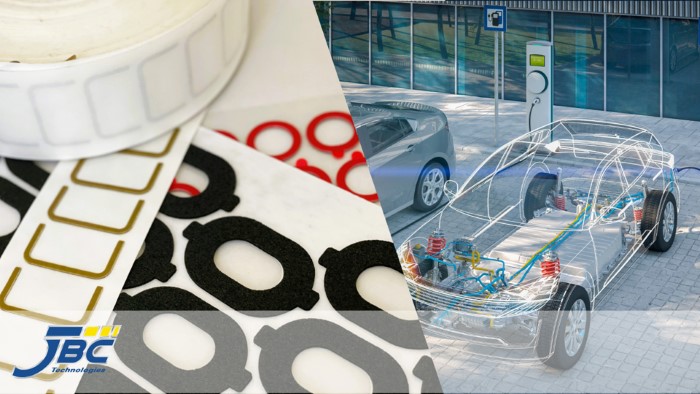
Automotive production has continuously evolved toward more automated processes, focusing on efficiency and lightweight design. Due to advancements in tight tolerance die cutting techniques, die-cut pressure-sensitive adhesives (PSAs) have become a preferred solution for car manufacturers, ensuring consistent quality while meeting consumer expectations for modern vehicles.
Understanding Pressure-Sensitive Adhesives
Pressure-sensitive adhesive tapes come in various forms and are essential for numerous applications. The Pressure Sensitive Tape Council (PSTC) defines PSAs based on three primary characteristics:
• Permanent tack
• Adhesion under light pressure
• No liquid-to-solid phase change
In automotive assembly, PSAs play a critical role. They are used to join and fasten components such as side-view mirrors, electronic displays, and are used in more complex interior components like display screen and electronic rear view mirrors. Beyond structural bonding, PSAs help minimize buzzing, squeaking, and rattling noises, contributing to a quieter and smoother ride for vehicle owners.
Why PSAs are Integral to Modern Automotive Production
Streamlined Production Processes
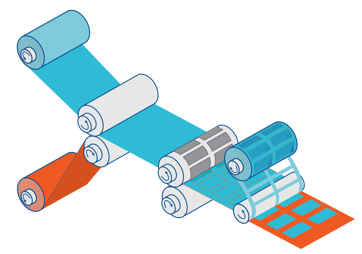
Die-cut PSAs are supplied in large rolls or sheets by material manufacturers. Converting specialists, such as JBC Technologies, cut these into precise shapes using methods like rotary die-cutting or flatbed die-cutting. These adhesives can also be paired with additional materials, such as foams or films, to create multifunctional components, simplifying production further.
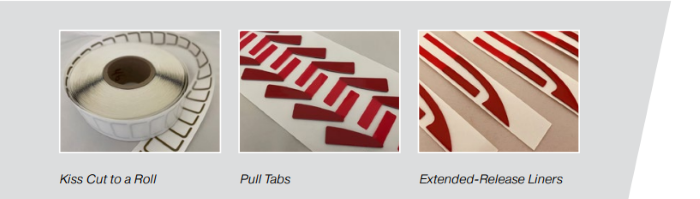
Unlike mechanical fasteners or spray adhesives, PSAs require less space and labor to apply, optimizing shop floor efficiency. Working with a converting partner early in the design process allows manufacturers to incorporate practical features like extended liners and pull tabs, which streamline production and enhance throughput.
Lightweighting
Automakers increasingly rely on lightweight materials like plastics to reduce vehicle weight and improve fuel efficiency. PSAs offer a bonding solution that aligns with this trend. They eliminate the need for heavier alternatives like welding, rivets, or dense liquid adhesives, resulting in lighter assemblies.
The lightweight nature of PSAs complements modern vehicle designs, enhancing energy efficiency while simplifying application compared to traditional fastening methods.
Precision and Consistency
Advanced die-cutting technologies, including digital die cutting, waterjet cutting, and multicam CNC routing, ensure that PSAs meet stringent quality standards. Automated systems, such as camera-based inspection, provide real-time defect detection, maintaining consistent part accuracy and quality throughout production.
Enhanced Consumer Experience
Die-cut PSAs provide significant advantages not only for manufacturers but also for end-users by enhancing the quality of the final product. Their low-profile design, combined with strong adhesive properties, contributes to a quieter ride and improved air tightness in consumer vehicles. Additionally, die-cut PSAs are instrumental in securing interior components like dashboard touch screens and exterior features such as backup sensor cameras. These elements play a critical role in improving the overall convenience and functionality of modern vehicles. Furthermore, the lightweight properties of PSAs contribute to greater energy efficiency, helping to elevate the overall driving experience for consumers.
Partnering with a Reliable Converter
Starting a new project can feel overwhelming, particularly with the wide range of manufacturing options available. Partnering with a reliable converter, such as JBC Technologies, can help simplify the process and guide you toward the best production solution for your needs.
JBC offers a range of custom parts, from specialty die-cut adhesives to multi-layer laminate materials, designed to take your project to the next level.
Acting as more than just a materials supplier, JBC supports the entire product lifecycle, from initial research and development to full-scale die-cut production. As a 3M Preferred Converter and Avery Dennison AdVantage Partner, combined with a skilled team of engineers, JBC provides the high-performance materials and expertise required to address any design challenge.
With a vertically integrated production process and extensive laminating capabilities, JBC helps save both time and budget throughout production.
Reach out today to discover how JBC Technologies can contribute to the success of your next automotive project.
