

As society looks to reduce its carbon footprint, the realm of sustainable construction has received heightened interest in recent years. To build a sustainable structure, it is important to choose materials that promote energy efficiency and are durable enough to limit the ongoing repair and maintenance required. With this in mind, keep reading for a detailed breakdown on 5 sustainable building materials to use in an industrial construction project.
HVAC Controls
A key aspect of creating a sustainable building is limiting the amount of energy consumed. No aspect of the building has the potential to suck energy quite like the HVAC system. Statistics indicate that some 40% of the building’s energy consumption is allotted to HVAC.
Building managers look to curb this figure by using smart temperature controls to condition the facility only when in use. Another way to add efficiency to the system is through the implementation of backdraft dampers. As their name implies, backdraft dampers prevent the backflow of conditioned air. This keeps air circulating in the correct direction and eliminates costly re-conditioning.
Hurricane Grade Storm Windows
In sprawling commercial facilities that span hundreds of thousands of square feet, there is sure to be a large amount of window surface. While this is beneficial in terms of promoting natural light flow, the wrong windows can present the opportunity for a potential point of weakness for unwanted air transfer. Simply put, window-to-wall transitions are typically one of the first areas of a building to become compromised in times of inclement weather, undermining the structural integrity of the building envelope.
Therefore, to keep window area airtight in all seasons, it is worthwhile to build with hurricane grade storm windows. The best storm windows are fabricated from structural steel frames, grilles, and sashes that will not break down in the face of extended storm exposure or inclement weather. They also use reinforced glass panels equipped to withstand winds up to 250 MPH and projectile impact up to 100 MPH, making the windows of an industrial building as indestructible as many types of siding products.
Concrete Sealers

Despite the advent of new and innovative building materials, concrete remains the most prevalent building product for industrial purposes. There is simply no other material that can match concrete’s versatility, durability, and cost-effectiveness.
With that said, concrete’s major drawback is its porosity. Without proper sealing, concrete will take in water and be at risk of cracking during the freeze/thaw cycle. The best way to protect concrete foundations, walkways, and other surfaces is through crystalline waterproofing products. These innovative sealers penetrate deep into the concrete bed, interacting with water to form crystals that harden and prevent future water ingress. By introducing them during the construction process, buildings can greatly reduce the maintenance and upkeep required for its concrete.
Permeable Pavers
Many industrial buildings have to secure thousands of square feet of parking space for employees, delivery trucks, and the like. Many types of asphalt and concrete parking lots are highly absorptive and suffer damage in short order. Unfortunately, it can be extremely difficult to repair degraded parking lots, as it usually requires closing off large sections of the space--something many industrial facilities simply cannot afford to do. And even when they do find a window to repair the parking lot, it is often a patch job that has little chance of long-term success.
As a result, more and more commercial buildings are exploring the benefits of permeable gravel driveways. While gravel historically has not been a strong option for such purposes--the frequent turning and backing of traffic led to ruts--modern permeable paver grids provide an innovative upgrade. Locked in place in the lot substrate, permeable paver grids are made of durable, recycled plastics that are well-equipped to handle both compressive and twisting forces. They are then filled with gravel, holding the stone in place when introduced to vehicle traffic. With natural drainage properties, permeable gravel driveways make for a great solution to minimize ongoing maintenance resources in industrial parking lots.
Flat Roof Support
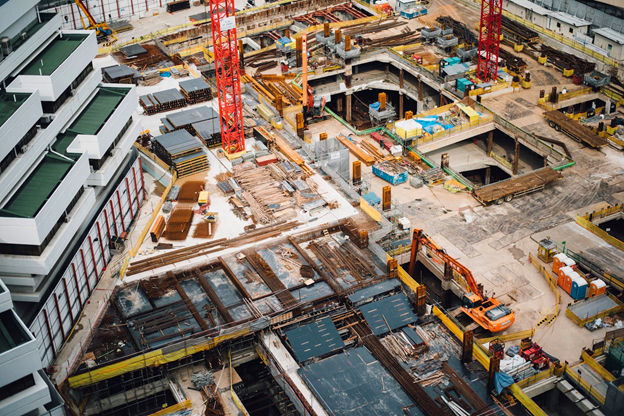
Modern industrial facilities are looking for ways to maximize every square foot of space possible. This includes utilizing the rooftop for storage and light packing purposes. When using the rooftop, it is important to make sure the substrate is reinforced with the right materials to handle the additional weight. This is where metal b decking comes in. Made from recycled metal products, b decking is a lightweight material that attaches to the roof substrate before the insulation and finishing product is applied. It provides shear support, helping transfer vertical loads horizontally to the building’s frame. It prevents acute damage to the roof and allows it to accommodate far greater weights than it could in the absence of b decking.
Maximize Sustainable Construction With These 5 Materials
Sustainable construction involves building with materials that are durable enough to stand the test of time and energy efficient enough to reduce nonrenewable energy consumption. With this in mind, backdraft dampers, storm windows, crystalline waterproofers, permeable pavers, and b decking are 5 sustainable materials to consider for an industrial construction project in 2023!
