

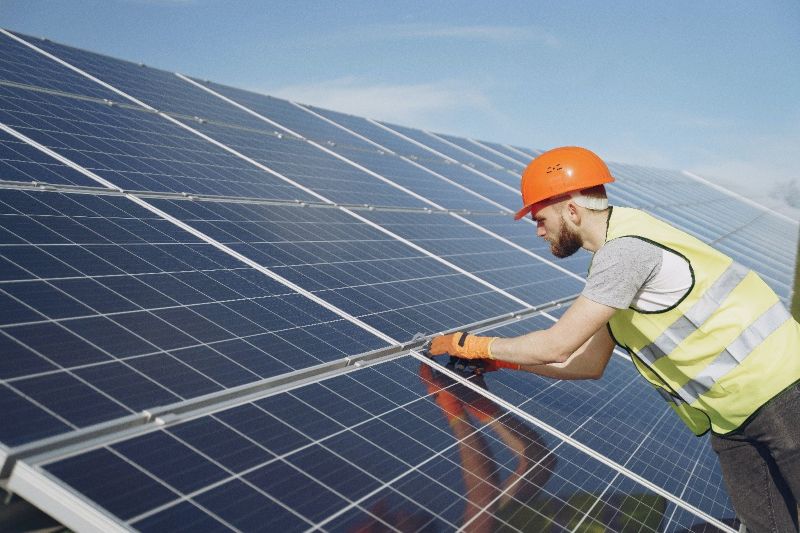
For decades, EPDM rubber has been the standard material for solar panel gaskets, photovoltaic (PV) module seals, and outdoor weatherproofing applications. Its durability and resistance to UV exposure have made it a trusted choice across the solar industry.
However, today's solar market is evolving.
Modern photovoltaic systems require lighter components, more complex sealing profiles, higher production volumes, and manufacturing processes that improve efficiency without sacrificing long-term performance. As a result, many solar OEMs are choosing Santoprene TPV (Thermoplastic Vulcanizate) over the traditional EPDM.
While both materials are suitable for outdoor use, Santoprene TPV offers significant advantages in manufacturing, design flexibility, sustainability, and long-term performance that make it an increasingly attractive material for next-generation solar systems.
The Demands Placed on Solar Panel Gaskets
Solar sealing systems must perform reliably for 25 years or more while continuously exposed to:
- UV radiation
- Ozone
- Rain and moisture
- Snow and ice
- Wind-driven movement
- Thermal expansion and contraction
- Daily temperature cycling
- Outdoor pollutants
- Mechanical vibration
A failed gasket can lead to water intrusion, corrosion, electrical failures, reduced system efficiency, and expensive field repairs. Material selection plays a critical role in the long-term reliability of the entire photovoltaic system.
EPDM: A traditional material for Outdoor Sealing
EPDM has earned its reputation through decades of successful use in outdoor applications. It offers excellent resistance to weathering, ozone, and ultraviolet exposure, making it a dependable material for many traditional solar gasket applications.
EPDM is commonly used for:
- Solar panel seam gaskets
- PV module frame seals
- Solar glazing gaskets
- Roof-mounted photovoltaic systems
- General outdoor weather seals
Its long history in exterior environments makes EPDM a proven solution for many applications.
Why Solar Manufacturers Are Moving Toward Santoprene TPV
While EPDM remains a capable material, modern solar manufacturing demands more than weather resistance alone.
Santoprene TPV combines the flexibility of vulcanized rubber with the processing advantages of thermoplastics, allowing manufacturers to produce highly engineered sealing profiles more efficiently while maintaining outstanding outdoor durability.
For OEMs producing thousands-or even millions-of components annually, these manufacturing advantages can significantly improve production efficiency and product consistency.
EPDM vs. Santoprene TPV
| Property | EPDM | Santoprene TPV |
|---|---|---|
| UV Resistance | Excellent | Excellent (UV-stabilized grades available) |
| Ozone Resistance | Excellent | Excellent |
| Weather Resistance | Excellent | Excellent |
| Flex Fatigue Resistance | Good | Excellent |
| Continuous Temperature Resistance | Good | Up to 135°C (275°F), grade dependent |
| Thin-Wall Extrusions | Limited | Excellent |
| Complex Profile Capability | Moderate | Excellent |
| Co-Extrusion | Limited | Excellent |
| Recyclable | No | Yes |
| Thermoplastic Processing | No | Yes |
1. Faster, More Efficient Manufacturing
One of Santoprene TPV's biggest advantages over traditional EPDM is how it is processed.
Unlike EPDM, which requires vulcanization after extrusion, Santoprene TPV can be processed using conventional thermoplastic extrusion equipment.
This offers manufacturers several advantages:
- Faster production speeds
- Improved dimensional consistency
- Reduced manufacturing waste
- Shorter lead times
- Better compatibility with automated production lines
- Lower overall processing costs
For solar manufacturers focused on high-volume production, these efficiencies can translate into improved productivity and reduced manufacturing costs.
2. Superior Design Flexibility
Solar systems continue to become more sophisticated, requiring sealing profiles that go far beyond simple gasket shapes.
Santoprene TPV is specifically engineered for complex profile extrusion and can produce thin-wall sections with excellent definition, including profile features as small as **0.33 mm (0.013 in.) radius**.
This enables engineers to design:
- Multi-lip weather seals
- T-gasket profiles
- U-channel seals
- Edge trim systems
- Hollow bulb seals
- Dual-durometer extrusions
- Co-extruded rigid/flexible profiles
These advanced designs can improve sealing performance while simplifying assembly.
3. Built for Long-Term Outdoor Exposure
Solar installations are designed to operate continuously in harsh outdoor environments.
UV-stabilized grades of Santoprene TPV are specifically developed for long-term weatherability and provide:
- Excellent UV resistance
- Outstanding ozone resistance
- Long-term flexibility
- Resistance to environmental aging
- Reliable sealing performance during years of outdoor exposure
Combined with excellent moisture resistance, Santoprene TPV performs well in rooftop solar, utility-scale solar farms, solar carports, and building-integrated photovoltaic (BIPV) systems.
4. Excellent Flex Fatigue Performance
Solar structures constantly experience movement caused by:
- Wind loading
- Thermal expansion
- Daily temperature changes
- Structural vibration
Santoprene TPV is recommended for applications requiring **excellent flex fatigue resistance**, allowing sealing profiles to repeatedly flex and recover without premature cracking or loss of sealing force.
This makes it well suited for dynamic solar applications where long-term durability is critical.
5. Wide Operating Temperature Range
Outdoor solar systems experience extreme temperature fluctuations throughout the year.
- UV-resistant Santoprene TPV grades offer:
- Low-temperature brittleness resistance to **–59°C**
- Continuous upper temperature resistance of **135°C (275°F)** for up to 1,000 hours (grade dependent)
This broad operating range helps maintain sealing performance in demanding climates while reducing the risk of material degradation caused by repeated thermal cycling.
6. Broad Chemical Resistance for Outdoor Solar Environments
Although sunlight and weather are the primary environmental challenges for solar sealing systems, gaskets may also come into contact with cleaning chemicals, atmospheric pollutants, fertilizers, road salts, and other substances throughout their service life.
Santoprene TPV offers excellent resistance to a broad range of chemicals commonly encountered in renewable energy applications, including:
- Water and moisture
- Saltwater
- Road salt and de-icing chemicals
- Dilute acids
- Dilute alkalis
- Alcohols
- Glycols
- Detergent solutions
- Ozone
- Many cleaning agents used during panel maintenance
This broad chemical compatibility helps maintain long-term sealing performance in utility-scale solar farms, coastal installations, agricultural solar projects, and commercial solar carports.
7. More Sustainable Manufacturing
As sustainability becomes a greater priority throughout the renewable energy industry, manufacturers are looking for materials that reduce waste and improve production efficiency.
Because Santoprene TPV is a thermoplastic vulcanizate, production scrap can often be recycled back into the manufacturing process.
Compared with traditional thermoset rubber, this can help reduce:
- Manufacturing waste
- Material loss
- Disposal costs
- Overall environmental impact
8. Applications Where Santoprene TPV Excels
Santoprene TPV is increasingly specified for:
- Solar panel seam gaskets
- PV module frame seals
- Solar glazing systems
- Solar carport waterproof gaskets
- Building-integrated photovoltaic (BIPV) seals
- Solar inverter enclosure gaskets
- Combiner box seals
- Outdoor electrical enclosure gaskets
- Battery Energy Storage System (BESS) enclosure seals
- Cable entry seals
- Custom co-extruded weather seals
9. Why More Solar OEMs Are Choosing Santoprene TPV
EPDM continues to be a trusted material with decades of proven outdoor performance.
However, as solar products become more advanced and manufacturing becomes increasingly automated, many OEMs are transitioning to Santoprene TPV because it delivers advantages beyond weather resistance.
With excellent UV stability, outstanding ozone resistance, superior flex fatigue performance, broad chemical compatibility, complex extrusion capability, recyclable manufacturing scrap, and thermoplastic processing efficiency, Santoprene TPV helps manufacturers improve both production and long-term product performance.
For companies developing the next generation of photovoltaic systems, Santoprene TPV offers a compelling combination of engineering performance and manufacturing efficiency.
Custom Santoprene TPV Solar Gaskets from SantopSeal
SantopSeal Corporation manufactures custom EPDM & Santoprene TPV extrusion profiles for renewable energy and photovoltaic applications, including:
- Solar panel seam gaskets
- PV module frame seals
- Solar panel edge trim
- Solar carport waterproof gaskets
- BIPV sealing systems
- Solar inverter enclosure gaskets
- Battery Energy Storage System (BESS) gaskets
- Outdoor electrical enclosure seals
- Multi-durometer TPV extrusions
- Co-extruded weather seals
- Custom profile extrusions
From prototype development through full-scale production, SantopSeal partners with solar OEMs, equipment manufacturers, and renewable energy companies to engineer sealing solutions designed for long-term outdoor performance and efficient manufacturing.
If you're evaluating alternatives to traditional EPDM for a new solar product or redesigning an existing sealing system, SantopSeal can help develop a custom Santoprene TPV extrusion engineered for your application.
Simply send us your drawing, CAD file, dimensions, or sample. Our engineering team will recommend the best material, manufacturing process, and production method for your application-helping you reduce lead times, improve sealing performance, and keep your projects moving.
Certifications & Compliance:
ISO 9001 | RoHS| REACH Compliant | UL 94 V-0
Contact SantopSeal Corporation:
- Phone: +1 (412) 444-1888
- Fax: +1 (412) 444-1882
- Email: [email protected]
- Website: https://www.santopseal.com/
