


As U.S. manufacturers race to reshore production amid rising tariffs and shifting global trade dynamics, they face mounting pressure to boost productivity and overcome persistent labor shortages — all while controlling costs. In this environment, automation has moved from a strategic option to a competitive necessity. Whether it’s collaborative robots streamlining assembly or AI-powered digital twins optimizing entire production lines, automation in 2025 is helping U.S. industry navigate disruption and drive efficiency.
In this special report on automation adoption in U.S. manufacturing, we’ll look at automation adoption sector-by-sector, review the latest automation trends and statistics and see how the U.S. currently stacks up again global automation innovation and adoption.
Sector-by-Sector: Where Automation Stands in the U.S.
Automation is making significant inroads across virtually every U.S. manufacturing sector — with each industry adapting the technology to its unique needs.
Automotive: Leading the Way The auto industry remains the most automated manufacturing sector in the U.S. In 2023 alone, automakers installed over 14,600 industrial robots — a record number — as they scale up EV production and navigate a growing skilled labor shortage. Robotics now support everything from precision welding and battery assembly to AI-based quality control systems.
Electronics & Semiconductors: High-Speed Automation Electronics manufacturers, particularly semiconductor and PCB producers, are deploying automation to support reshoring efforts and ensure yield consistency. With the construction of major U.S. chip fabs (e.g., NVIDIA/TSMC), these facilities are embracing robotics, AI, and digital twins to model and optimize high-precision environments.
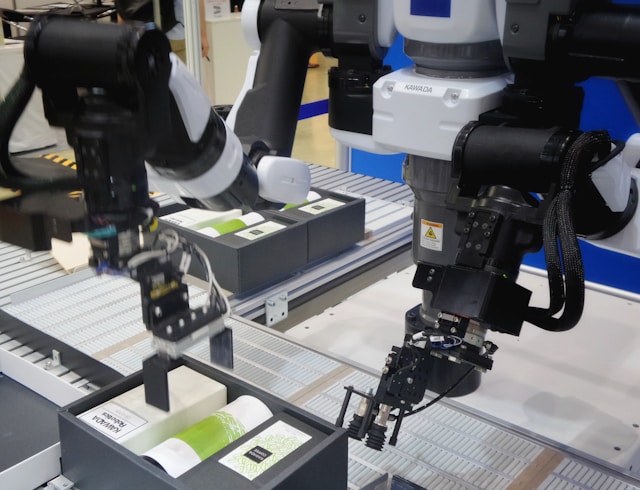
Food, Beverage & CPG: Catching Up Fast While historically slower to automate, the food and consumer-packaged-goods sector is now rapidly deploying robots — especially for packaging, palletizing, and inspection. Only about one-third of CPG companies currently use robots on more than half their lines, but 80% of food processors plan to expand their robot fleets, with a strong emphasis
Pharmaceuticals: Precision, Compliance, and Traceability Pharmaceuticals and medical devices increasingly use robotics and digital systems for sterile filling, inspection and supply-chain tracking, and industry 4.0 technologies (IoT sensors, smart factory controls, augmented reality for operators) are spreading in aerospace and machinery plants.
Aerospace & Defense: Advanced Simulation and Adaptive Manufacturing: Automation adoption in aerospace and defense is highly specialized, reflecting the sector’s emphasis on complex assembly, compliance, and long life cycles. Leading aircraft makers use robotics and digital twins for assembly and simulation, while parts suppliers use additive manufacturing and AR-guided service. Major aircraft manufacturers are also investing in robotic drilling, fastening, and painting systems,
Automation Adoption Statistics and Trends 2025
The pace at which advanced digital technologies are being adopted across U.S. manufacturing is accelerating in response to a convergence of pressures: growing labor shortages, reshoring efforts, and the competitive demand for greater operational efficiency. Artificial intelligence, digital twins, and warehouse automation are no longer strategic options—they are fast becoming operational necessities.
AI Adoption Expands Across the Manufacturing Value Chain
Artificial intelligence (AI), once largely experimental, is now a critical tool across multiple layers of manufacturing. A 2024 McKinsey survey found that 72% of companies across industries now report using AI in some capacity. In the U.S. specifically, 35% of businesses report having adopted AI technologies in their operations.
Notably, generative AI is growing quickly, moving beyond text-based tasks to influence:
• Predictive maintenance modeling
• Supply chain optimization
• Quality inspection and defect detection
• Intelligent scheduling and workforce planning
These capabilities are helping manufacturers reduce downtime, forecast disruptions, and operate leaner with fewer resources.
Digital Twins Gain Traction in Plant Operations
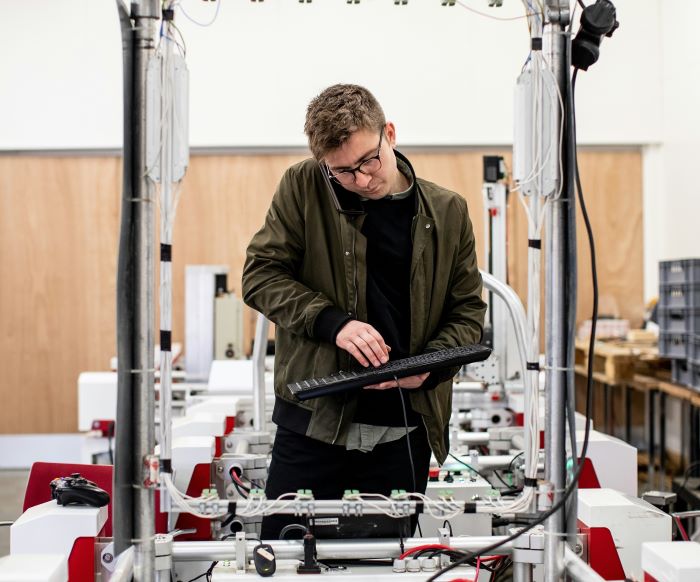
Digital twins—virtual models of equipment, production lines, or entire facilities—are enabling manufacturers to test and refine processes without interrupting real-world operations. According to IoT Analytics, 29% of manufacturers have already partially or fully implemented digital twin technologies, and 67% plan to prioritize them for improved sustainability and efficiency.
Common applications include:
• Simulating production changes before physical rollout
• Monitoring machine health and performance in real time
• Reducing energy use through virtual modeling
• Accelerating product development through virtual prototyping
For manufacturers facing pressure to optimize without adding headcount, digital twins are emerging as a high-impact solution.
Automation Reshapes Warehousing and Logistics
The logistics sector is undergoing rapid automation, with warehousing in particular becoming a proving ground for AI-integrated robotics. Amazon now operates more than 750,000 warehouse robots—a sharp increase from previous years. The company’s newest fulfillment centers, designed with next-gen automation in mind, have reported up to a 25% increase in productivity from robotics and AI integration.
This shift is mirrored across the broader U.S. warehouse automation sector, which is expected to grow by roughly 1.5× by 2025, driven by needs for faster throughput and leaner staffing models.
Labor Shortages Are Driving the Push to Automate
These automation trends are being propelled by a sustained shortage of skilled labor. A joint Deloitte and Manufacturing Institute study projects that U.S. manufacturing will need to fill 3.8 million jobs by 2033, yet a significant portion of these roles may remain unfilled.
As of April 2025:
• Over 440,000 U.S. manufacturing jobs were unfilled.
• 20.6% of manufacturers surveyed in Q3 cited labor constraints as a top operational challenge
With experienced workers retiring and not enough new talent entering the pipeline, automation offers a direct path to maintaining—or even increasing—production capacity without relying on traditional hiring alone.
Cutting-Edge Technologies for Productivity
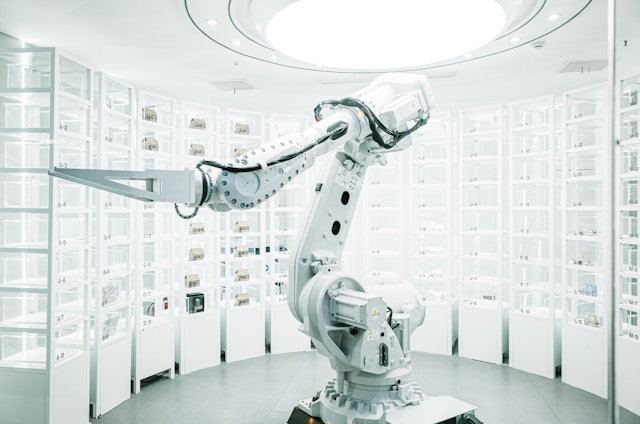
Faced with labor shortages and the need to reshore production, U.S. manufacturers are keen on advanced automation that boosts output and flexibility. Key technologies include:
• AI and Machine Vision: AI-powered systems optimize processes and quality. Predictive maintenance (AI analyzing sensor data) is cutting downtime. For example, automated optical inspection and deep-learning vision are increasingly used in electronics and automotive plants. AI also supports “digital worker” tools such as voice interfaces and AR guidance to extend skilled labor. (A McKinsey study, for instance, notes massive gains from generative AI in R&D and operations.)
• Digital Twins & Virtual Commissioning: Virtual models of factories (“digital twins”) allow engineers to simulate production before physically building lines. NVIDIA is deploying its Omniverse platform and robotics (Isaac) to design and operate new U.S. AI chip fabs. These digital twins shorten ramp-up time and improve energy efficiency. Case studies show digital twins can cut development time by over 50% and boost system performance. Recent data finds this technology is also accelerating skill development and onboarding for the U.S. manufacturing workforce.
• Collaborative Robots (Cobots): Flexible, human-safe robots are proliferating in U.S. shops. Cobot welders, material handlers and pick-and-place arms let small factories automate custom tasks. IFR notes cobot welding is a fast-growing trend driven by welder shortages. In Raymath’s case (below), cobots enabled 24/7 unmanned machining and welding, yielding huge throughput gains.
• Autonomous Logistics (AGVs/AMRs): Self-driving forklifts and mobile robots optimize material flow. Amazon’s fulfillment centers illustrate this: robots now sort, lift and carry packages, working alongside people. U.S. ports and warehouses are similarly adopting AGVs to move pallets and containers. A Frost & Sullivan forecast predicts warehouse automation spending will roughly double by 2025.
• High-Speed Connectivity (Private 5G/IIoT): Reliable wireless networks (private 5G/LTE) allow real-time control of robots and AR tools and many U.S. factories are now deploying 5G. Examples include Tesla’s Gigafactory Texas, GM’s Factory ZERO, BMW’s U.S. plants and John Deere, all using private cellular networks for machine communication and IoT devices. This enables low-latency AI vision and mobile robots without Wi-Fi dead zones.
• Edge Computing & Cloud Integration: Factories increasingly use edge servers and cloud AI (AWS, Azure) to process IoT data. This hybrid IoT approach lets plants run AI analytics on-site (for speed) and send aggregated data to the cloud for fleet-wide optimization.
• Augmented Reality (AR) & Digital Workflows: AR headsets and tablets help technicians diagnose problems and train remotely. Digital work instructions and mixed-reality inspection reduce errors. Vendors like PTC (Vuforia) and Microsoft (HoloLens) are piloted in many U.S. plants to extend expert reach.
• Sustainable Automation: “Green” manufacturing leverages automation to meet energy and carbon goals. Smart drives, regenerative systems and real-time energy monitoring are integrated into new equipment. For instance, sensor networks and AI optimize HVAC and lighting in smart factories.
Collectively, these technologies make factories more resilient, helping to alleviate many of the obstacles associated with the reshoring of production. New U.S. plants (from semiconductors to EV batteries) can achieve high throughput with lean staffing. Labor shortages no longer prohibit high-volume manufacturing when automation handles repetitive and hazardous tasks.
Real World Applications on Cutting Edige of U.S. Automation
What are some real world use cases? From small metal shops to tech giants, companies are deploying advanced robotics and AI-driven systems to boost output, increase flexibility, and future-proof their operations. Here are three compelling examples:
Raymath: Solving the Skilled Labor Shortage with Cobots: In Ohio, metal fabricator Raymath faced a critical shortage of skilled welders in its high-mix, low-volume operation. Rather than scaling back, the company partnered with THG Automation to deploy four Universal Robots cobots for welding and CNC tending. The impact was dramatic: welding throughput tripled, machining output jumped 600%, and the facility achieved round-the-clock, lights-out operation—all without adding staff. With a payback period of under a year, CEO Rob Shaver credits the cobots’ flexibility in handling varied parts without expensive fixtures. Raymath’s success underscores how U.S. job shops are turning to collaborative automation to not only bridge labor gaps, but also unlock new levels of productivity.
Amazon Robotics: Pioneering Autonomous Logistics Amazon is reshaping warehouse logistics with more than 750,000 robots now operating globally. At its advanced fulfillment center in Shreveport, Louisiana, eight robotic systems—including mobile units, arms, sorters, and palletizers—work in tandem with human employees. Powered by AWS cloud and AI, the system continuously coordinates tasks in real time, boosting productivity by an estimated 25% over older facilities. It’s a clear view of where logistics is heading: an autonomous ecosystem where humans oversee and optimize increasingly self-directed workflows.
NVIDIA & Foxconn: Automating the AI Chip Supply Chain To secure its AI hardware supply chain, NVIDIA is reshoring production through new high-tech factories in Arizona and Texas, built with partners like Foxconn. Automation is central to the effort. Using its own Omniverse digital twin and Isaac robotics software, NVIDIA will simulate and optimize production lines before building them. Robots trained virtually will take over complex tasks, helping reduce energy use and improve efficiency. With plans to manufacture up to $500 billion in AI hardware domestically, NVIDIA’s approach highlights how automation enables advanced manufacturing to scale—even in high-cost environments like the U.S.
Global Innovations Influencing U.S. Manufacturers
U.S. manufacturers aren’t automating in a vacuum; they’re closely tracking global trends, especially from Asia and Europe, where automation is often more advanced. What happens overseas increasingly shapes factory floors here at home, as companies benchmark against international leaders and adapt global best practices to American operations.
Asia leads the way in automation, with rapid growth and innovation:
• South Korea has the world’s highest robot density — 1,012 robots per 10,000 workers — thanks to major investments in high-tech industries and automation training.
• Singapore follows with 770 robots per 10,000 workers, showing deep integration in electronics and biotech manufacturing.
• China added over 276,000 robots in 2023 and now operates approximately 1.8 million. Aggressive government incentives are fueling its shift to high-tech, automated production.
• India saw a 59% increase in robot installations in 2023 as part of its industrial modernization drive.
Asian manufacturers are also developing the technology — not just deploying it:
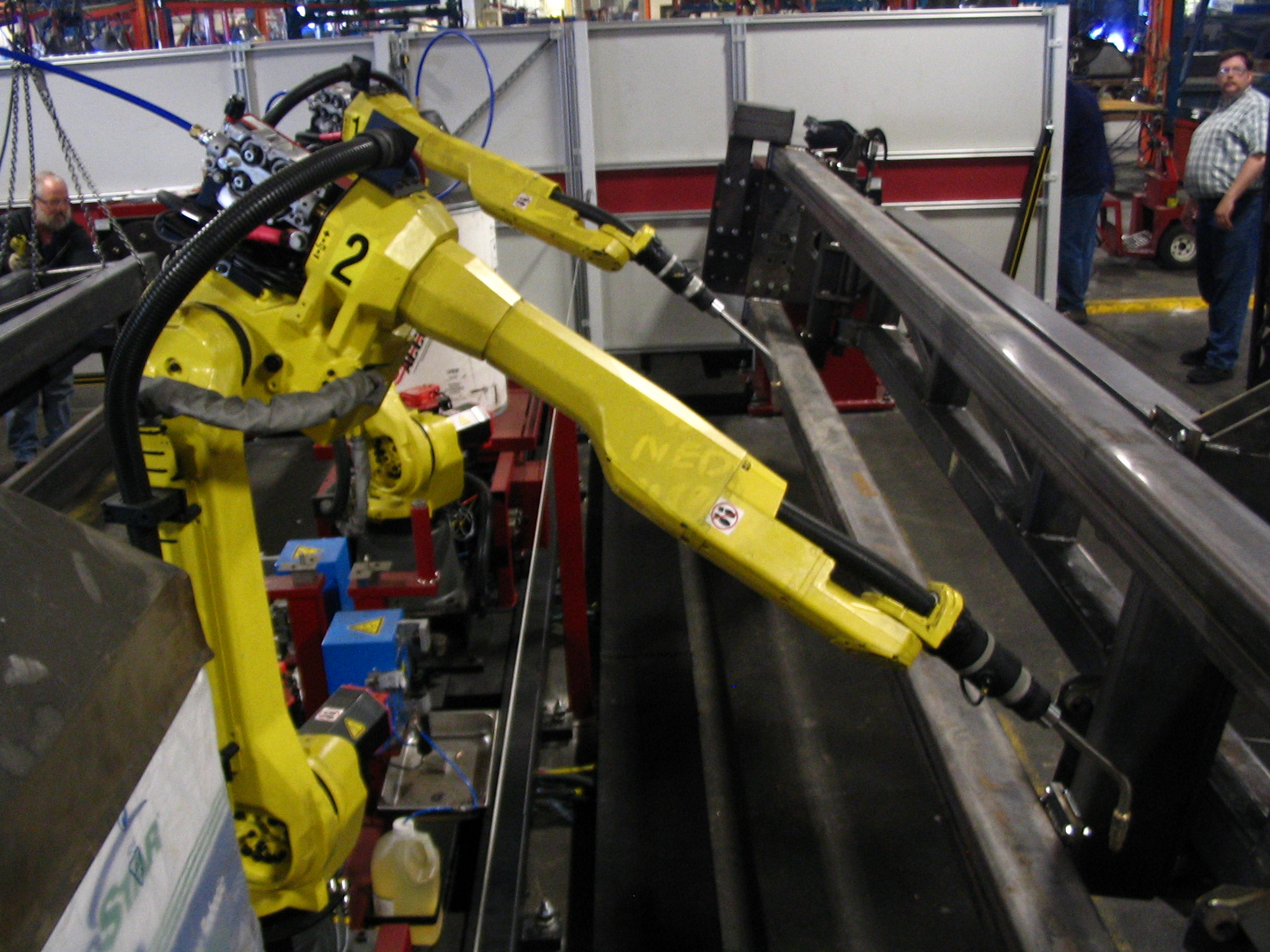
• Collaborative welding robots (“cobots”) that took off in Asia are now being adopted in U.S. metal and auto plants.
• AI-based visual inspection systems used in electronics are beginning to influence U.S. quality control.
Europe continues to push the envelope with smart manufacturing and automation-friendly policies:
• The region averages approximately 219 robots per 10,000 workers, higher than the U.S.
• Germany’s Industrie 4.0 initiative is driving adoption of AI, IoT sensors, and digital twin technologies across factories.
• Robot installations in Europe rose 9% in 2023, hitting a record 92,393 units, led by:
o Spain: +31% increase, largely in automotive.
o Slovakia: +48% increase, also driven by car manufacturing.
European factories are pioneers in:
• Predictive maintenance
• Smart factory controls
• Data-driven production
These innovations are increasingly shaping U.S. strategies. American firms are not just adopting overseas ideas — they’re also collaborating internationally to develop shared standards and tools for automation, ensuring seamless integration across borders and supply chains.
Tap Into the Surge in Automation Demand with IndustryNet
As automation reshapes the future of U.S. manufacturing, thousands of buyers are actively searching for automation equipment, robotics integrators, control systems, and industrial service providers. If your company offers automation solutions — from cobots to AI-enabled sensors — IndustryNet connects you with qualified buyers who are ready to modernize their operations.
List your business for free on IndustryNet and gain exposure to engineers, plant managers, and purchasing professionals sourcing automation products and services every day. Or, consider an enhanced listing and help your company stand out to the millions of buyers that visit the source each year. Join the growing network of U.S. manufacturers accelerating digital transformation.
