

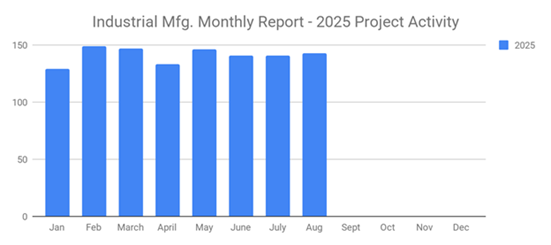
The industrial manufacturing sector has maintained consistent output from January through August 2025, a notable shift from the volatility seen in 2024 and 2023, according to Industrial SalesLeads. Heading into the fourth quarter, the Federal Reserve has cut interest rates by 0.25% as of September 17th. This adjustment could help sustain capital expenditures through year-end by reducing borrowing costs and reinforcing investor confidence.
Calm Waters
As new reports from Reuters, Moody’s and WTO claim, tariffs were to increase inflation and cause instability in the industrial sector. As the chart shows, capital expenditures have remained stable at a higher level, a positive sign of expansion, modernization, and innovation for the industrial sector. How did this compare to previous years? According to Industrial SalesLeads reports, the period from January to August saw over a 42% swing in 2024 and a 30% fluctuation in 2023. This proved difficult for companies to plan capital expenditures.
What’s Ahead for Q4 2025
The Q4 projections are in numerous directions, depending on who is reporting. Industrial manufacturers have shared that a Federal Reserve rate cut, even of just 0.25%, would likely help them maintain consistent capital expenditures in Q4. If the rate cut doesn’t occur, they may fear a return to market instability. According to MNI’s roundup of key economic reports, “factory orders plummeted, backlogs rose sharply and manufacturing activity in key regions showed fresh momentum…”
Stay current on capital expenditures in the industrial manufacturing sector with Industrial Project Reports. More here.
