

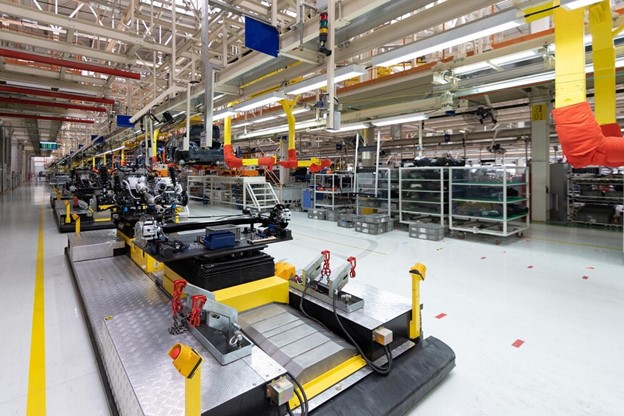
The demands on production and warehouse facilities have never been greater than they are today. Competition is fierce in all sectors of the economy, and customers have come to expect instant gratification and front-door delivery.
In order to stay afloat, these types of commercial businesses must have a next-level facility that sets it apart from its competitors. Keep reading as we explore the various ways that building layout can add efficiency to the production and warehousing processes.
Improves Workflow
Whether it be a food production facility or manufacturing plant, efficient operations are essential to profit generation. The building must be laid out in a way that all machinery, conveyors, work areas, and loading docks feed into one another. This type of assembly line infrastructure limits the amount of down time raw materials and finished products spend occupying space on the production floor, opening the door for increased throughput.
Maximizes Space
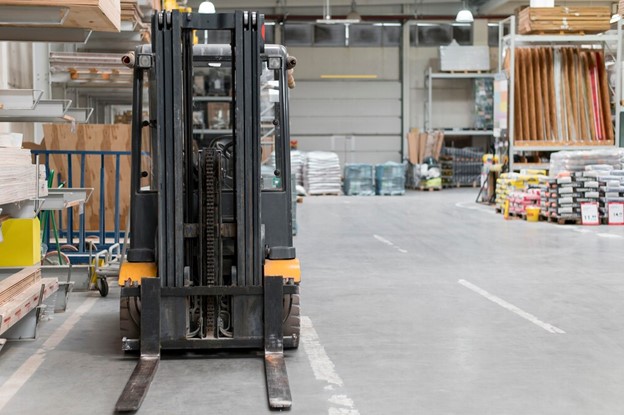
Space is at a premium these days in commercial real estate. Rising real estate costs and tightening environmental standards make it more challenging than ever to get sufficient floor space to house operations. As such, when you finally get the green light to start construction, it is imperative to use every square inch of space as efficiently as possible.
Warehouses are finding creative ways to utilize vertical space. Elaborate racking systems help store products vertically and mesh well with automated picking technology. More and more buildings are constructing functional rooftop deck tiles to serve as an area for temporary storage and pre-packing.
Modern facilities are also expanding their loading bays. This streamlines access for couriers and delivery vehicles while providing a more productive packing and loading environment for employees.
Promotes Productivity

It is vital to create comfortable production and storage environments. This obviously starts with climate controls. Workers need to be at a comfortable temperature to be safe, happy, and productive. Cold storage facilities must also be carefully constructed to insulate products and raw materials against the threat of spoilage.
In addition, noise controls are paramount to establishing a comfortable work environment. The various tools, machinery, and general bustle of a plant can create a din that is both distracting and physiologically threatening (headaches, ringing ears, etc.).
Use sound proof doors to limit noise transfer between adjacent areas of the building. Apply hvac silencers to commercial generators. Add acoustic wall panels and ceiling clouds for soundproofing mass that keeps noise local to its origin.
Increases Durability
Modern production and warehouse facilities are designed with durability in mind. They must be able to withstand the frequent reconfiguration of machinery, intense traffic, and increasingly severe weather.
Metal buildings are a popular commercial building type known for their elite durability. They offer elite resistance to fire, pests, UV, and impact damage. They will frequently outlast the life of the business itself.
Other high-durability materials used to reduce downtime in commercial facilities include epoxy terrazzo floors, stainless steel work surfaces, hurricane-grade storm windows, and foundation waterproofing membranes.
Enhances Safety
Safety is a top priority in commercial facilities. Not only does it promote productivity, but it protects the firm from damaging litigation and public relations nightmares.
There is really no way to be too safe when laying out your facility. Implement the latest sprinkler systems, smoke baffles, and other fire detection/prevention technology. Add a comprehensive commercial hand railing system around all staircases and elevated walkways. Apply non-slip coatings to all concrete and terrazzo floors. Choose glass partitions when possible to allow for clear sight lines for safer maneuvering of materials and machinery.
Streamlines Customization
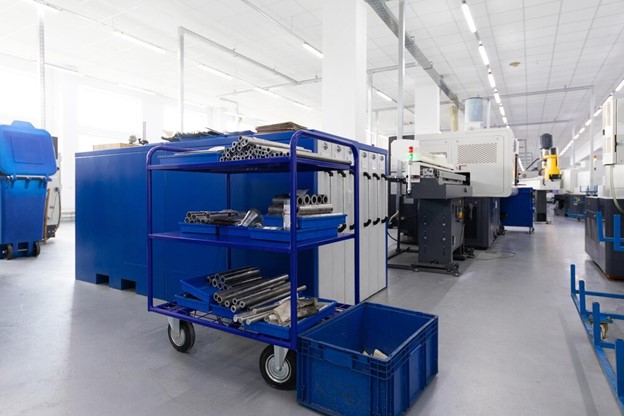
The modern business environment is increasingly dynamic. The processes and best practices of today may be obsolete this time next year. As such, modern production and warehouse facilities must be designed with customization in mind so that the firm can quickly pivot to meet the needs of an ever-evolving business landscape.
The open interior is paramount for streamlined customization. With fewer interior walls, renovation and reconfiguration is greatly expedited. In addition to its high durability, steel is a great building type for open interiors. It provides ample clear span that creates sprawling interior spaces, giving it a huge leg up over building types that require vertical support columns every 20-30 feet.
Demountable partition walls are also essential for a highly customizable space. They can be quickly erected to define space and create privacy or broken down and removed to keep the floor clear as needed.
The Best Strategic Layout Considerations for Production and Warehouse Efficiency
From improved workflow to streamlined customization, meticulous layout is essential for maximizing a commercial building. By considering these and any of the other considerations listed above, businesses can add efficiency to their production and warehousing processes.
Author Bio

Brian Jeffries is a freelance writer who loves sharing his knowledge and expertise on construction projects and materials. He lives in Winter Park, Florida where he enjoys spending time with his wife and working on projects in his spare time. Brian’s work as a freelance writer can be found on Building Product Advisor, a construction industry resource site.
