

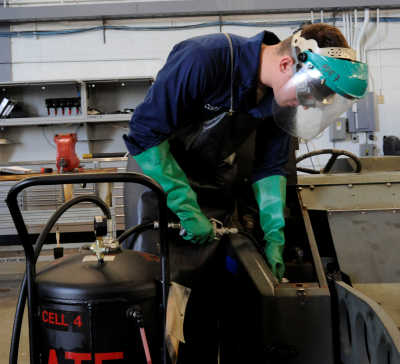
 Hydraulic equipment utilizes pressurized fluid to perform various machining operations. Hydraulic power drives numerous types of machine, such as diggers, bulldozers, cranes and other construction equipment.
This power is also commonly utilized in industrial facilities, where hydraulics is incorporated into applications like robotic presses, lathes and arms.
Without hydraulic equipment, companies specializing in hydraulic pumps or hydraulic hoses would not have the ability to manufacture their products.
Related: Key growth trends in the U.S. industrial hydraulics sector
Hydraulic equipment suppliers comprise a significant portion of the hydraulics industry. Their average sales account for a huge percentage of the hydraulic industry's overall sales.
With the position of the industry in mind, growth among hydraulic equipment suppliers becomes more relevant.
Number of Companies in the Sector
According to information collected by MNI, compiler and publisher of the industrial data that powers IndustryNet, there are 617 companies operating in the sector of hydraulics equipment. Those companies account for 15,919 jobs in the industry.
Of those companies, eight plants (1%) are women-owned while four (1%) are minority-owned. 59 (10%) of the plants import their raw materials. In terms of distribution, 459 (74%) of the companies focus on domestic distribution with 147 (24%) plants focus on international distribution.
The vast majority of hydraulic equipment companies are private, with 553 (90%) fitting this description. This leaves 56 (9%) plants as public.
To put these figures into a better perspective, compare them to the entire hydraulics industry. Hydraulics equipment suppliers account for 37.26% of the industry's 1,656 companies.
Number of Jobs and Job Change Over the Year
As mentioned, there are currently 15,919 jobs in the hydraulic equipment sector. One year ago, this figure was 15,738. This indicates an increase of 1.15% over the past year. Changes to employment can also be viewed on a company-by-company scale.
27 (4%) of the companies in the industry report employment increases. Meanwhile, 32 companies or 4% report employment declines.
By comparison, the hydraulics industry as whole accounts for 54,819 jobs. Therefore, the hydraulic equipment companies make up about 25.57% of the jobs in the larger industry.
Average Sales and Sales Change
The average current sales for hydraulic equipment suppliers are $10.58 billion. One year ago, this figure was $10.53 billion. This translates into an improvement of 0.5% during the past year. Once again, this can be broken down to compare company growth.
19 (3%) hydraulic equipment companies report sales growth. It is worth noting that no hydraulic equipment company have reported a sales decline.
For perspective, industrial hydraulics as a whole has average current sales of $23.86 billion. Therefore, the average current sales of hydraulic equipment are 44.37% of this total.
Regional Data
To get a full image of the hydraulic equipment sector, it also helps to explore regional data distribution. In terms of distribution, the largest number of companies in this sector are in the Midwest where 235 (38%) of all U.S. hydraulic equipment suppliers are located.
This region is followed by the South, where there are 186 (30%) companies in the sector.
From there, the West has 122 (19.77%) companies, with the Northeast bringing in the remaining 74 (11.99%).
Conclusion
The hydraulic equipment sector is a sizable part of the entire hydraulics industry, with 617 companies and an average current sales of $10.58 billion. More growth is projected for the future of this sector, making it one to watch.
