

3 MIN. READ
COVID-19 has disrupted every industry in the world in just a few short weeks. Quarantines, shipping disruptions and closure of non-essential businesses are just some of the effects, not to mention the shocking loss of life.
In the midst of this crisis, certain industries were classified as "critical infrastructure," which indicated their importance in keeping society operational despite widespread restrictions.
Some of the categories include health care, shipping and delivery, food and drug stores and certain types of manufacturing.
Critical Infrastructure
Electric motors, generators and transformers are one of the manufacturing sectors that was granted critical infrastructure status.
Related: Inside the Critical Infrastructure Supply Chain
Considering that the majority of our world needs electricity to function, this did not come as a surprise to those in the business. However, there were major challenges to overcome as it pertained to dealing with the effects of COVID-19.
Industry Impact on Society
The electric motor and generator sector is not exceedingly large in terms of jobs. According to data collected by MNI, compiler and publisher of the industrial information that powers IndustryNet, there are just over 78,000 people working for 1,300 separate companies. But their contribution is enormous to the national infrastructure.
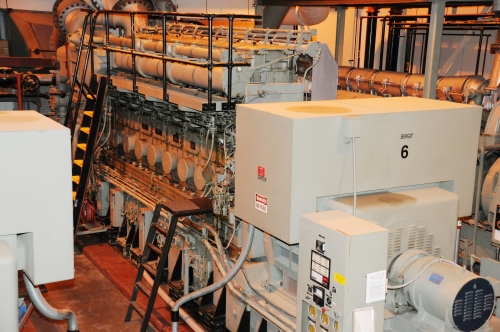
For example, hospitals have large arrays of emergency generators that provide uninterrupted power. In the event of an electrical disturbance, these generators activate and help keep patients alive. Another example is the ubiquitous cylindrical transformers that are perched atop telephone poles. These devices step-down power to levels that are usable by homes and businesses. Without them, we would all be sheltering-in-place in the dark.
Industry Characteristics
The manufacturers that produce electric motors, generators and transformers benefit from a minimal reliance on foreign raw materials. Only 16% actually import the materials and components necessary to build their products, giving them a large measure of stability over those sectors that are now struggling with overseas supply chain problems.
Furthermore, customers for these electrical products are worldwide, with 40% being distributed internationally. This is higher than the 29% rate for the manufacturing industry as a whole.
Currently, the COVID-19 disruptions have had a detrimental effect on these sales, but that is expected to bounce back after the pandemic is over.
Additionally, the sector has grown with respect to jobs in the past year with a 1.45% boost in employment. While short-term predictions are hazy due to the pandemic, long-term prospects are very positive as the world continues towards an electrically powered future.
The distribution of these companies geographically is dual peaked in a manner of speaking.
The Midwest and South are home to 30% and 37% respectively, while the West and Northeast host 17% and 16%. Some of the largest companies from each region include Generac Power Systems, Ingersoll-Rand, Orient Fan Company and Hamilton-Ferris Company Power Products.
Electrical motors, generators and transformers are in high demand. Luckily, you can contact suppliers with ease through IndustryNet.
The free industrial marketplace offers access to over 400,000 individual manufacturers and supplier of more than 10,000 products and services. Getting custom quotes is made simple through the use of our customized quote tools. Spark a connection today on IndustryNet.
