

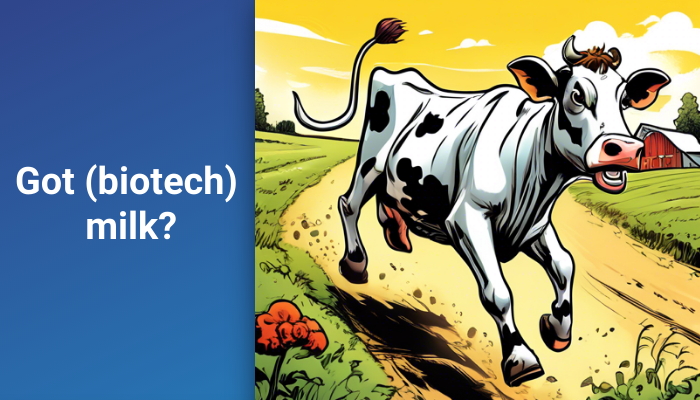
The recent avian influenza outbreak in U.S. farms has reignited concerns about the safety and potential health risks associated with traditional dairy production. However, a new wave of innovation is brewing in the biotech world, offering a potential solution: cow-free milk.
Yes, you read that right: milk without Bessie.
As first published in MIT Technology Review, biotech companies are pioneering methods to create milk proteins like casein and whey using genetically engineered yeasts and plants. This approach bypasses the need for cows altogether, raising some interesting possibilities:
• Enhanced Safety: Biotech milk eliminates the risk of diseases like avian influenza potentially transmitted through traditional dairy farming.
• Reduced Environmental Impact: Dairy cows contribute significantly to greenhouse gas emissions and water usage. Cow-free milk offers a more sustainable alternative.
• Ethical Considerations: Concerns about animal welfare in factory farms can be addressed with this technology.
This recent move follows a general shift in the food industry towards animal product replacements, often referred to as “fake meat” or alternative proteins. In recent years, more processed plant-based alternatives to animal products, such as soy-based bacon and turkey, have entered the market and their U.S. retail sales are growing significantly. In fact, plant-based, microorganism- and animal cell-based alternatives to animal meat, fish, eggs, and dairy are projected to make up at least 11% of global protein consumption in 2035.
But, mooving right along, are there any potential downsides to cow-free milk?
• Cost-Effectiveness: Biotech milk needs to be produced at a competitive price point to rival traditional dairy products, which often benefit from government subsidies.
• Consumer Acceptance: Consumers might need to adjust to the taste and texture of these new milk alternatives.
Despite these hurdles, the development of cow-free milk represents a significant leap towards a more sustainable and potentially safer dairy industry. As technology advances, this new innovation has the potential to transform the way we consume milk and its related products.
