

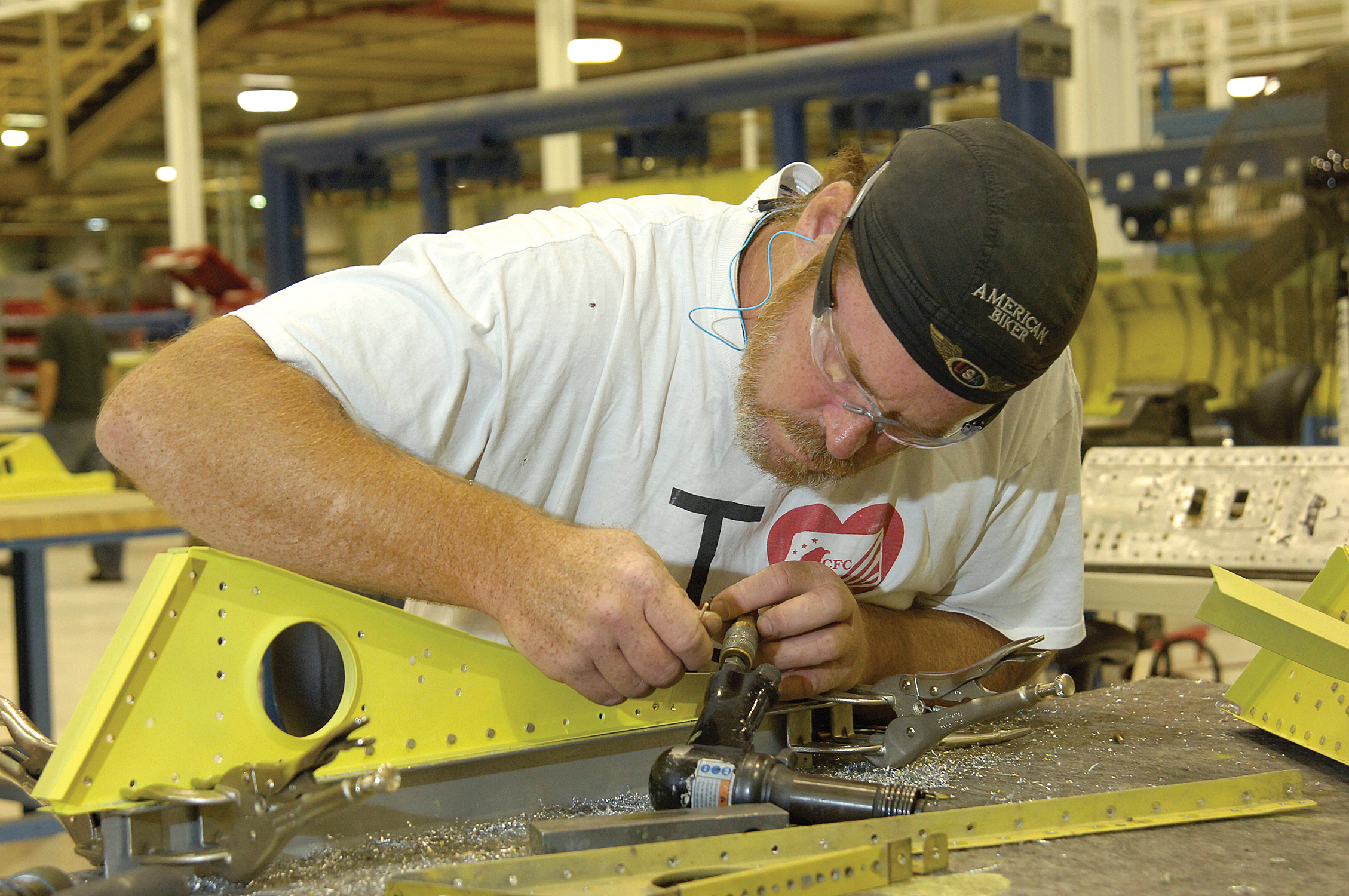
 Industrial metal grinding crosses virtually every metal-consuming sector. The nuts, bolts and holes that hold together buildings and bridges must be ground to remove surface imperfections.
The medical industry relies on smoothly ground surfaces for everything from trays that hold surgical instruments to the instruments themselves.
In aerospace manufacturing, parts are ground to specific measurements to increase strength, decrease drag and improve aircraft performance. Automotive engines rely on smoothly ground surfaces to decrease piston friction.
Looking for metal finishing services? Check out IndustryNet's Expert guide to choosing the right type of metal finishing service.
Grinding also produces the smooth surface that allows further finishing processes such as paint, adhesive or rubber coating to adhere. Whether the final surface is simply cosmetic such as would be required for a shiny, new car or for structural safety as in the rubber coating on a metal staircase, grinding allows the remainder of the metal finishing to look and function as it should.
Automation is on the rise
Once relegated to a labor-intensive, time-consuming task performed manually, automation is on the rise in the metal grinding industry. Since machines work more quickly than do humans, automation saves time during the metal finishing process. How much time it saves depends on the complexity of the programming.
Traditionally reserved for high-volume jobs such as in the automotive sector, metal grinding automation is moving into other sectors as the ability to grind with greater precision and tolerance increases. Not all industrial grinding can be or even should be performed by a machine, but automation now plays a large role in the metal processing and finishing arena.
IndustryNet recently compiled an analysis of the U.S. metal grinding industry. Surveying its 527 grinding companies, IndustryNet found that this sector experienced a loss in the number of jobs. In March 2018, the companies employed only 6,605 individuals, down one percent from the 2017 total of 6,674 jobs.
With manufacturing employment on the whole reporting an increase throughout the country, it may seem as though industrial grinding is in decline.
The sales trend was the inverse of the jobs trend, though. Current sales stand at around $642 million versus 2017 sales at approximately $633 million, representing an increase of 1.4 percent. The increased use of automation in metal grinding likely accounts for a significant portion of the increase in sales despite the decrease in personnel.
Notably, industrial grinding is a localized service. Eighty-seven percent of all industrial grinding is performed domestically as opposed to only 70 percent of U.S. manufacturing as a whole.
Additionally, metal grinders source their raw materials locally at approximately twice the rate of national manufacturers. Eleven percent of manufacturers in the U.S. import their raw materials as opposed to only 5 percent of industrial grinding operations.
The majority of industrial grinding facilities call the Midwest home, with 261 industrial metal grinding facilities choosing that location, or 50 percent of the nation's total number of shops. The West comes in second place for prime locale with 108 companies, or 20 percent of U.S. operations.
Following closely on its heels, the North claims 93 companies, or 18 percent of the national total. The South trails the nation with only 65 industrial grinding shops, or 12 percent of the country's total.
Connect with industrial grinding companies in the U.S.
IndustryNet provides invaluable information for your business, utilizing its database of over 400,000 U.S. manufacturers and suppliers of more than 10,000 products and services. Turn to IndustryNet for your next partner, supplier or quote. Whether you are searching for industrial grinding companies or virtually any other type of product or service, you can contact a company directly, connect with them on social media or simply request a list of suppliers in your area.
